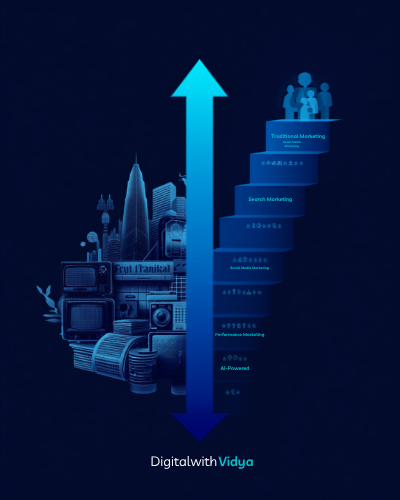

TRADITIONAL DIGITAL MARKETING
Digital marketing began with the rise of the internet, when businesses started moving beyond newspapers, television, and radio to establish a presence online. Early marketers relied on basic websites, email campaigns, banner advertisements, online directories, and simple search engines to reach audiences.
SEARCH AND SOCIAL ERA
As search engines became a major source of information, businesses began focusing on Search Engine Optimization (SEO). Marketers researched keywords, optimized websites, created useful content, and worked on backlinks to improve search visibility. Instead of simply promoting a brand, businesses could now reach people actively searching for their products or services.
SOCIAL MEDIA MARKETING
The growth of platforms such as social networks changed marketing from one-way communication to direct interaction with audiences. Brands began using posts, videos, stories, reels, and communities to increase awareness and engagement. Social media allowed businesses to understand audience interests, receive instant feedback, and create stronger relationships with customers.
PAID AND PERFORMANCE MARKETING
Digital advertising introduced a more measurable approach to marketing. Businesses could target audiences based on interests, demographics, search behavior, location, and online activity. Marketers could track impressions, clicks, conversions, cost per lead, and return on investment, making it easier to understand what was working and continuously improve campaigns.
AUTOMATION AND PERSONALIZATION
As digital marketing became more advanced, automation reduced repetitive tasks and improved customer experiences. Businesses started using automated emails, lead nurturing, remarketing, customer segmentation, and personalized recommendations. Marketing could now respond to what customers did, rather than sending the same message to everyone.
AI POWERED MARKETING
AI is transforming digital marketing by making it more predictive, personalized, and data-driven. AI can analyze large amounts of customer and campaign data, identify patterns, predict behavior, generate content ideas, optimize advertising, personalize customer experiences, and help marketers make faster decisions. Instead of replacing marketing strategy, AI gives marketers powerful tools to understand audiences better, work more efficiently, and improve results.